Kite guide · Africa
Kitesurfing in Morocco: Dakhla or Essaouira, When to Go, Where to Stay
A shallow lagoon in Dakhla with wind all year, strong summer wind and waves around Essaouira, and lagoon hotels 100 to 150 m from the kite centre.
- Dakhla: wind all year
- Peak wind in July and August
- Sea 17 to 21.5 °C: pack a wetsuit
- Kite centre 100–150 m from rooms
In short
Kiters who fly to Morocco usually choose between two areas. Dakhla, in the Moroccan-controlled part of Western Sahara, is a shallow lagoon about 45 km long with side-shore trade wind all year, strongest from April to September: the easier of the two for learning and flat-water riding. Around Essaouira, further north on the Atlantic coast, the wind blows from about March or April to October and peaks in July and August, the bay has chop and small waves, and Moulay Bouzerktoun and Sidi Kaouki add Atlantic waves for confident riders.
The sea is cool in both areas, about 17 to 21.5 °C, so pack a 3/2 mm wetsuit. Our stays are on the Dakhla lagoon: PK25 has its own sports centre about 100 m from the bungalows, and at Dakhla Attitude the Duotone Pro Center is about 150 m from reception. Dakhla is in a disputed territory, so check your government's travel advice before you book.
At a glance
Morocco at a glance
- Wind
- North-east trade wind: all year in Dakhla, about March or April to October around Essaouira
- Peak season
- July and August in both areas; Dakhla's strong season runs from April to September
- Water
- About 18.5 to 21.5 °C in Dakhla and 17 to 21.5 °C around Essaouira
- Wetsuit
- 3/2 mm full suit most of the year; a shorty on warm summer days in Dakhla
- Kites
- About 7 to 12 m in Dakhla; a 9 or 10 m covers most days around Essaouira
- Best for
- Learning and flat water in Dakhla; strong wind and waves around Essaouira
- Flights
- About 3 h 30 to 4 h from London to Marrakech or Agadir; Dakhla via Casablanca, or direct from Paris and Madrid
- Time zone
- GMT all year since 20 September 2026: London time in winter, an hour behind in summer
- Entry
- No visa for UK or German tourists for up to 90 days; French and German visitors need a passport, not an ID card
Verified with GOV.UK, the French and German foreign ministries, the official sites of Dakhla Attitude, PK25 and the Duotone Pro Center Dakhla, IKSURFMAG, Planet Kitesurf Holidays, KiteWorldWide, Kiterr, Sportif, the Essaouira schools Seagull and Windy Essaouira, Climates to Travel and timeanddate · Updated October 2026
Compare
Moroccan kite spots compared
Dakhla and Essaouira are the two kite areas most riders travel to, and they are very different. Dakhla is about shallow lagoon water, flat at low tide, and wind on most days of the year; the coast around Essaouira is about strong summer wind, chop and Atlantic waves. Pick the area that matches your level.
| Area | Water | Season | Level | On Kitesurf Holiday |
|---|---|---|---|---|
| Dakhla | Shallow lagoon about 45 km long, flat at low tide, choppier at high tide; Atlantic waves on the ocean side | All year; strongest April to September; waves from October to March | All levels on the lagoon; the Speed Spot, the White Dune and the waves for confident riders | Yes: spot guide, hotels and school |
| Essaouira bay and Diabat beach | Sandy bay about 4 km long with chop and small waves, bigger waves further down the bay | About March or April to October; strongest in July and August | All levels with a school; beginners ride in the calmer mornings | Not yet |
| Moulay Bouzerktoun, about 25 km north of Essaouira | Atlantic waves off a small sandy beach with rocky slabs | Strongest wind in summer, with smaller waves; bigger swell from autumn to spring, when the wind is less steady | Advanced wave riders only | Not yet |
| Sidi Kaouki, about 25 km south of Essaouira | Open beach exposed to the swell, with a powerful shore break and currents | The Essaouira trade-wind season, roughly April to September | Intermediate to advanced riders; best known as a surf spot | Not yet |
Sources: our Dakhla guide; Planet Kitesurf Holidays, KiteWorldWide, Kiterr, IKSURFMAG, Sportif and Kitesurf the World; the Essaouira schools Seagull and Windy Essaouira.
Destinations
Our Morocco spot guide
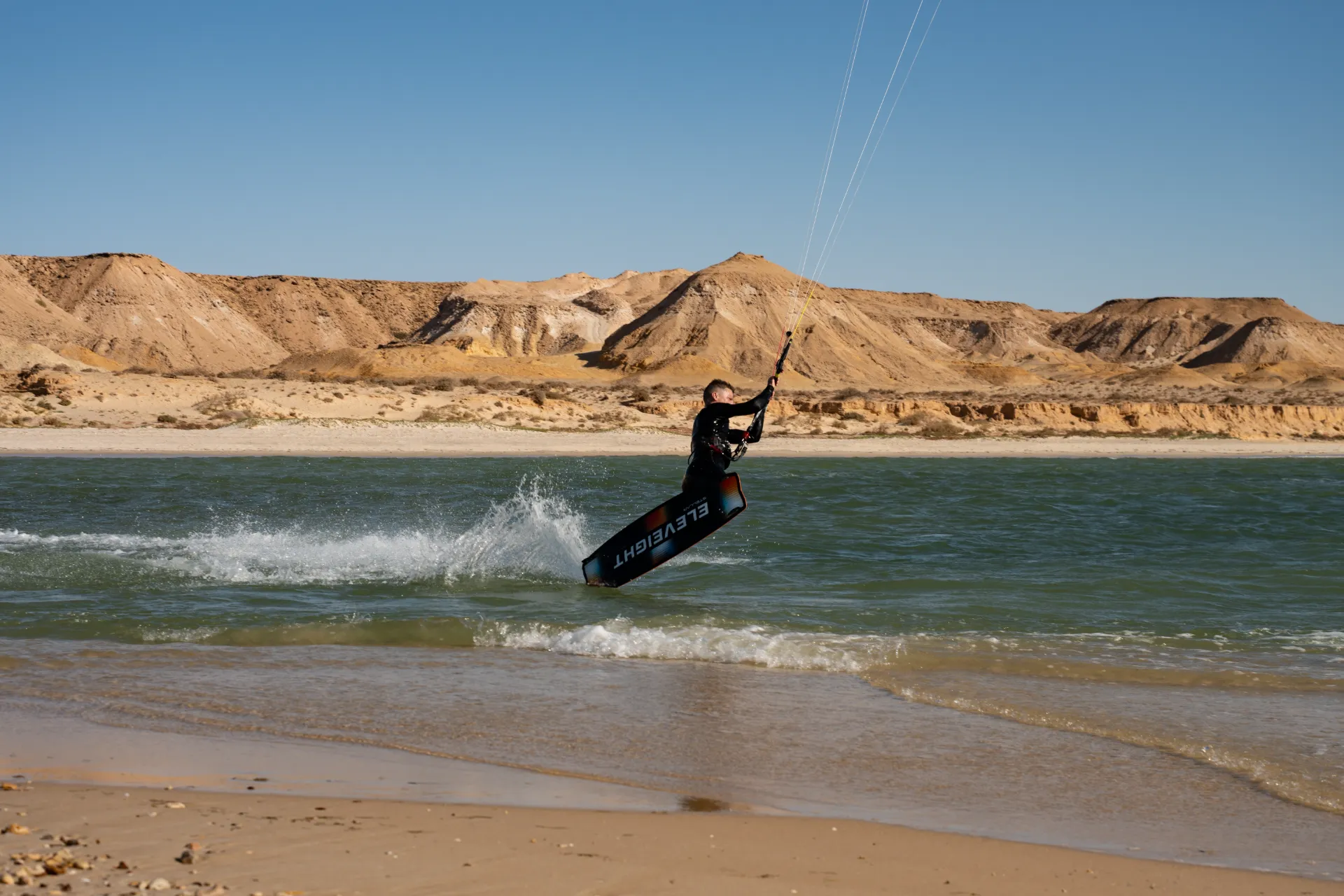
Our Dakhla kitesurf guide covers the lagoon, the Speed Spot, the White Dune and the Atlantic wave spots, the wind and water month by month, lessons and prices, and where to sleep next to the kite centre.
On the spot
Where to stay on the kite beach
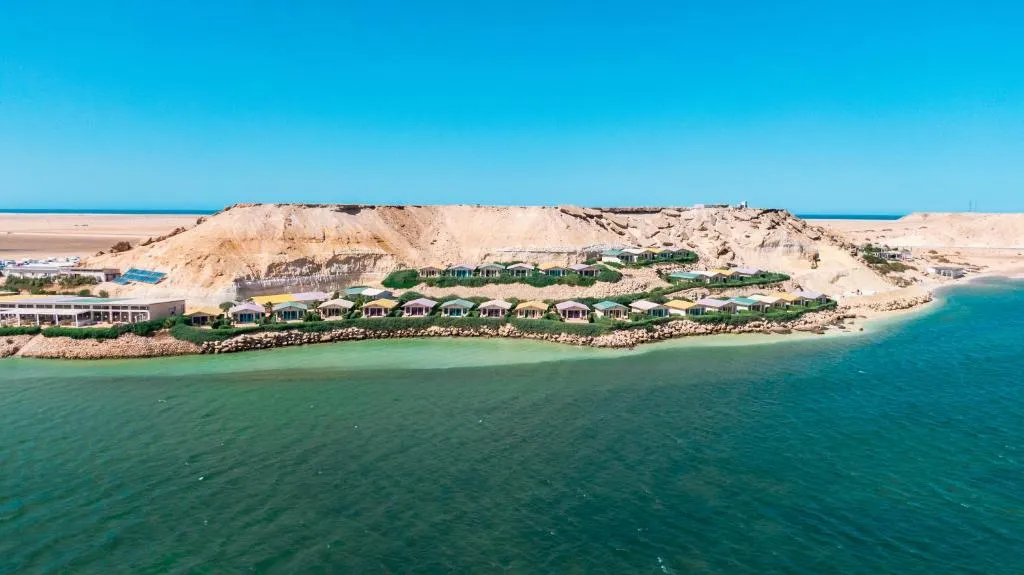
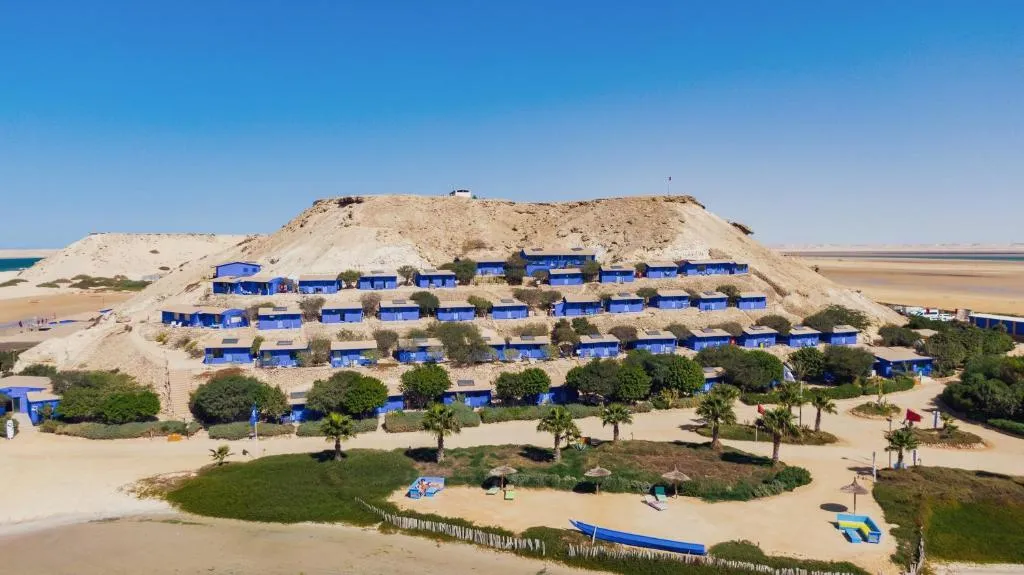
Both our Moroccan stays are on the Dakhla lagoon, so you walk to the water: PK25 has its own sports centre about 100 m from its bungalows, and at Dakhla Attitude the Duotone Pro Center is about 150 m from reception.
Lessons
Kite schools we list in Morocco
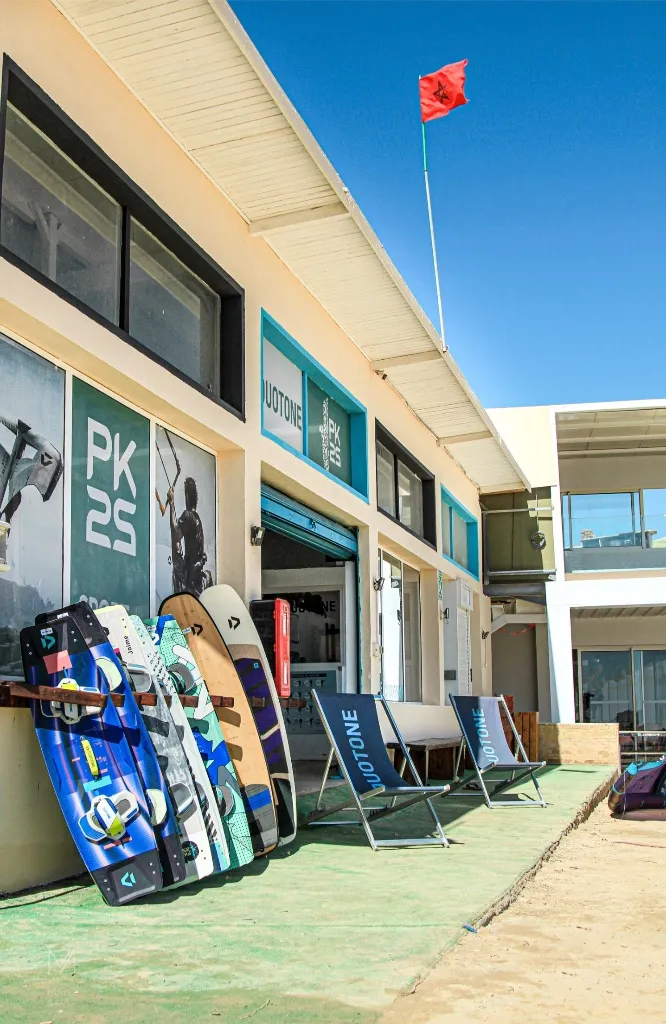
The Duotone Pro Center Dakhla teaches on Dakhla Attitude's beach all year, with IKO or VDWS certified instructors, in private lessons or with two students per instructor.
Wind forecast
Wind today at our kite spots in Morocco
Updated 2 Nov, 12:47
Dakhla Lagoon, Dakhla
Dakhla guide and 7-day forecast →Today
11kts
NW · gusts 19
LIGHTTue
10kts
NNE · gusts 16
LIGHTWed
9kts
NNE · gusts 15
LIGHT
White Dune, Dakhla
Dakhla guide and 7-day forecast →Today
11kts
NW · gusts 19
LIGHTTue
10kts
NNE · gusts 16
LIGHTWed
9kts
NNE · gusts 15
LIGHT
Oum Lambouir, Dakhla
Dakhla guide and 7-day forecast →Today
12kts
NNW · gusts 18
OKTue
10kts
NNE · gusts 16
LIGHTWed
10kts
NNE · gusts 12
LIGHT
Essaouira Bay, Essaouira
Wind only: no guide yet
Today
4kts
NNE · gusts 8
LIGHTTue
9kts
SSW · gusts 16
LIGHTWed
12kts
SW · gusts 21
OK
GO16–24 ktsOK12–15 ktsSTRONG25 kts and moreLIGHTunder 12 kts
Strongest wind and gusts of the day, in knots. Kite sizes are a rough guide for a rider of about 75 kg. Weather data by Open-Meteo.com.
See the place
Video
Dakhla Travel Guide: 4 tips to get the most out of your kitesurfing trip
Kiter Evan Bartlett explains the Dakhla spot and shares his travel tips: when to go, where to stay, what to do and other places to visit in Morocco.
Video: Evan Bartlett on YouTube
Choose
Dakhla or Essaouira?
Choose Dakhla if you want to learn, ride flat water or stay in a hotel with the kite centre on its beach. Choose Essaouira if you want strong summer wind, waves and an old town a short walk from the beach, and you are happy to ride in chop. The water is cool in both.
| At a glance | Dakhla | Essaouira area |
|---|---|---|
| Water | Shallow lagoon, flat at low tide, choppier at high tide | Sandy bay with chop and small waves; Atlantic waves at Moulay Bouzerktoun and Sidi Kaouki |
| Wind | Side-shore north-east trade wind all year, often over 30 knots in July and August; lighter mornings | North-east trade wind from about March or April to October, side-shore to side-onshore in the bay; it builds late in the morning and can reach 25 to 35 knots in summer |
| Sea | 18.5 to 21.5 °C | 17 to 21.5 °C |
| Air (average high) | 22 to 26.5 °C | 18.5 to 22.5 °C |
| Where you sleep | Lagoon hotels with the kite centre on their beach, about 30 km from Dakhla town | Riads in the medina, about 10 minutes on foot from the kite beach, or guesthouses and hotels near the beach |
| Off the water | Boat trips to Dragon Island, the White Dune by 4x4, oyster farms, desert trips | The medina and its markets, surfing, camel and horse rides on the beach |
| Getting there | Fly to Dakhla (VIL) via Casablanca, or direct from Paris Orly, Madrid or Gran Canaria; the camps are about 30 minutes from the airport | Fly to Essaouira airport, about 15 km from town, or to Marrakech, about 2 to 3 hours away by road |
| On Kitesurf Holiday | Spot guide, two hotels and a school | Not yet |
Sea and air: monthly averages from Climates to Travel. Wind: our Dakhla guide, Seagull Essaouira, Windy Essaouira, Planet Kitesurf Holidays, IKSURFMAG and KiteWorldWide.
Season
When to go, month by month
The north-east trade wind drives both areas, but it behaves differently. In Dakhla it blows all year, strongest from April to September; around Essaouira it has a clearer season, from about March or April to October. In both places it is strongest in July and August. The sea is coolest from February to April and warmest from August to October.
| Period | Dakhla | Essaouira | Water | Our take |
|---|---|---|---|---|
| December to February | The lightest months are December and January, still windy on many days | The lightest months, with averages of about 13 to 14 knots | Dakhla 18.5 to 20 °C, Essaouira 17 to 18.5 °C | Dakhla is the better bet; a 4/3 mm helps if you feel the cold |
| March to May | Picking up; the strong season begins in April | The season starts, with averages of 17 to 20 knots | Dakhla 18.5 to 19.5 °C, Essaouira 17 to 18.5 °C | Good in both, with the coolest water of the year |
| June to August | The strongest months, often over 30 knots in July and August | The windiest months, with averages of 23 to 25 knots | Dakhla 20 to 21 °C, Essaouira 20 to 21.5 °C | Bring small kites; learners ride in the calmer mornings |
| September to November | Strong in September, lighter in October and November, when the Atlantic wave season begins | Easing, from about 21 knots in September to 15 in November | About 20 to 21.5 °C in both | The warmest water of the year; October suits wave riders in Dakhla |
Water: monthly averages from Climates to Travel. Wind: Dakhla from the sources of our Dakhla guide (IKSURFMAG, Planet Kitesurf Holidays, Craving Adventure and the Duotone Pro Center); Essaouira from Kiterr's monthly average wind speeds.
Beginners and families
Is Morocco good for beginners and families?
Yes, if you choose Dakhla and a school. The lagoon is shallow, with standing areas, flat at low tide, and the wind is side-shore. At Dakhla Attitude, the Duotone Pro Center Dakhla teaches only private or two-student lessons, children under 15 learn in private lessons with a parent on site, and the hotel has a kids club and babysitting on request; PK25 has bungalows for four and an all-inclusive formula. Around Essaouira, beginners usually learn in the calmer mornings, because summer afternoons can be too strong, and Moulay Bouzerktoun and Sidi Kaouki are for confident riders only.
For families, the Atlantic is cool in both areas, so swims tend to be short. Dakhla's camps are about 30 km from town, so most families stay put and use the hotel. Essaouira puts a walled medina, markets and restaurants a short walk from the beach, but Planet Kitesurf Holidays finds it better suited to teenagers and adults than to young children, and its summers are cool and windy rather than beach weather.
Travel
Getting there, entry and Western Sahara
Dakhla airport (VIL) has flights from Casablanca, about 2 hours away, and from other Moroccan cities, plus direct flights from Paris Orly, Madrid and Gran Canaria. There is no direct flight from the UK, so British riders connect in Casablanca or Madrid. The lagoon camps are about 30 km, roughly 30 minutes, from the airport. For Essaouira, fly to its small airport, about 15 km from town, which has direct flights from cities such as London Stansted, Paris, Brussels Charleroi and Weeze, or to Marrakech, about 2 to 3 hours away by road. Flights from London to Marrakech or Agadir take about 3 h 30 to 4 h. Schedules change by season: check before you book.
UK citizens can visit Morocco and the Moroccan-administered part of Western Sahara for up to 90 days without a visa, and GOV.UK asks for a passport valid at least 3 months after the date you arrive. German citizens need no visa for tourist stays of up to 90 days either. French and German visitors must travel on a passport, as ID cards are refused: France asks for one valid for the whole stay, Germany for at least 6 months' validity on arrival. Make sure your passport is stamped when you arrive: some travellers without an entry stamp have had trouble leaving. Morocco, Dakhla included, went back to GMT on 20 September 2026 and no longer changes its clocks for Ramadan.
Dakhla is in Western Sahara, a disputed territory. The UK Foreign Office advises against all travel to areas within 40 km of 'the Berm', the militarised line that separates Moroccan-controlled territory from the area to the east, and beyond it. Advice differs between governments: France asks travellers crossing Western Sahara to get permission from the Moroccan gendarmerie or army for any route off the paved coastal road, and Germany's Foreign Office advises against travel to Western Sahara altogether. Check your own government's current advice and your travel insurance before you book.
Honest notes
Good to know before you book
- Tides shape every session in Dakhla: the riding area is huge at high tide and much smaller at low tide.
- Essaouira's main beach in front of the town is busy with swimmers, horses and camels; Windy Essaouira, for one, teaches at Diabat, about 8 minutes' drive south.
- Bringing a drone into Morocco is banned without prior authorisation, according to the French and German foreign ministries.
- The dirham (MAD) is a closed currency, so you cannot easily buy it before you travel; cards are widely accepted in tourist areas.
Our take
Our verdict
Great for
- Beginners and improvers who want shallow lagoon water and wind on most days of the year: Dakhla
- Families who want the kite centre a short walk from the room, a kids club and full board, as at Dakhla Attitude
- Confident riders chasing strong summer wind and Atlantic waves around Essaouira, Moulay Bouzerktoun and Sidi Kaouki
Think twice if you are
- Anyone who wants a warm sea for long swims: Morocco's Atlantic stays at about 17 to 21.5 °C, while the Red Sea at El Gouna reaches about 28 °C in August
- Nervous beginners who can only travel in July and August: summer afternoons are strong in both areas
- Travellers whose government advises against Western Sahara, or whose insurance will not cover it: Dakhla is in the disputed territory
FAQ
Frequently Asked Questions about Kitesurfing in Morocco
Where are the best places to kitesurf in Morocco?
Dakhla and the coast around Essaouira are the two areas most riders travel to. Dakhla has a shallow lagoon with wind all year and suits every level, while Essaouira's bay suits every level with a school, though summer afternoons are strong, and nearby Moulay Bouzerktoun and Sidi Kaouki are wave spots for experienced riders.
When is the best time to kitesurf in Morocco?
In Dakhla the wind blows all year and is strongest from April to September, often above 30 knots in July and August, with December and January the lightest months. Around Essaouira the season runs from about March or April to October, and the wind is strongest in July and August.
Is Dakhla or Essaouira better for kitesurfing?
Dakhla is better for learning and flat-water riding: a shallow lagoon, side-shore wind and hotels with the kite centre on their beach. Essaouira suits riders who want strong summer wind, waves and an old town near the beach, but the bay is choppy and summer afternoons can be too strong for beginners.
Is Morocco good for beginner kitesurfers?
Yes, with a school, and Dakhla is the easier place to start: the lagoon is shallow and flat at low tide and the wind is side-shore. In Essaouira, beginners take lessons in the calmer mornings, as the wind builds late in the morning and can reach 25 to 35 knots on summer afternoons.
Where should I stay for kitesurfing in Morocco?
On the Dakhla lagoon, where you can walk to the launch. PK25 has its own sports centre about 100 m from its bungalows, and at Dakhla Attitude the Duotone Pro Center is about 150 m from reception; hotels in Dakhla town are about 30 minutes from the lagoon by road.
Is Dakhla safe to visit?
Dakhla is in Western Sahara, a disputed territory, in the part administered by Morocco. The UK Foreign Office advises against all travel within 40 km of the Berm, the militarised line between Moroccan-controlled territory and the area to the east, and beyond it, while Germany's Foreign Office advises against travel to Western Sahara altogether. Check your own government's advice and your travel insurance before you book.
Do I need a wetsuit for kitesurfing in Morocco?
Yes, for most sessions. The Atlantic stays cool, about 18.5 to 21.5 °C in Dakhla and 17 to 21.5 °C around Essaouira (Climates to Travel), so a 3/2 mm full suit is the usual choice; in Dakhla a shorty can be enough on warm summer days.
How much do kite lessons cost in Morocco?
At the Duotone Pro Center Dakhla, a 2-hour semi-private lesson costs 1,144 to 1,580 MAD and a 2-hour private lesson 1,672 to 2,390 MAD, depending on the season (current price list); booking and paying at least 30 days ahead saves 10%. Prices vary between schools and seasons, so check when you book.
Sources
Last checked October 2026
- GOV.UK: Morocco entry requirements
- GOV.UK: Western Sahara travel advice
- GOV.UK: Western Sahara entry requirements
- German Federal Foreign Office: Morocco travel and safety advice, in German
- France Diplomatie: Morocco entry and stay, in French
- France Diplomatie: Morocco safety, in French
- Hespress: Morocco returns to GMT on 20 September 2026, in French
- timeanddate: time zone changes in Dakhla
- Dakhla Attitude: kitesurf lessons, prices and spot facts (official)
- Dakhla Attitude: lagoon spots and trips (official)
- Dakhla Attitude: kids club (official)
- PK25 Dakhla (official site)
- PK25: all-inclusive offer (official)
- Duotone Pro Center Dakhla (official site)
- IKSURFMAG: Dakhla travel guide
- Planet Kitesurf Holidays: kitesurfing in Dakhla
- Craving Adventure: kitesurfing in Dakhla
- Climates to Travel: Dakhla climate
- Wikipedia: Dakhla Airport, airlines and destinations
- Planet Kitesurf Holidays: kitesurfing in Essaouira
- IKSURFMAG: Essaouira travel guide
- KiteWorldWide: kitesurfing in Essaouira
- Kiterr: Essaouira spot guide and monthly wind
- Seagull Club Essaouira: Essaouira, Sidi Kaouki and Moulay spots
- Windy Essaouira: the kite spots around Essaouira
- Sportif: Moulay Bouzerktoun
- Kitesurf the World: kite spots in Morocco
- Climates to Travel: Essaouira climate
- Wikipedia: Essaouira-Mogador Airport
- FlightsFrom: London Luton to Marrakech
- FlightsFrom: London Gatwick to Agadir
We only publish facts we could confirm with the official website or two independent sources. Spotted something out of date? Write to info@kitesurf.holiday.