Kite destination · Cape Verde

Kitesurfing in Sal: Kite Beach, the RIU Beach and Where to Stay

Side-onshore wind at Kite Beach, flat water in front of the RIU hotels, an expert wave at Ponta Preta, and trade wind from about November to May.

  • Trade wind November to May
  • Sea at 22 to 27 °C
  • Kite Beach 10 min by taxi
  • Flat water by the RIU hotels

In short

Sal is Cape Verde's busiest kite island and a winter destination: the north-east trade wind blows from about November to May, with the most wind from January to mid-April, while July to September is the calm, humid part of the year. Kite Beach, on the east coast about 10 minutes by car from Santa Maria, gets side-onshore wind with chop, swell and often a shorebreak. The beach in front of the RIU hotels at Ponta Preta is flatter but the wind blows slightly off it, so schools teach there with a boat. The Ponta Preta reef wave is for experts only.

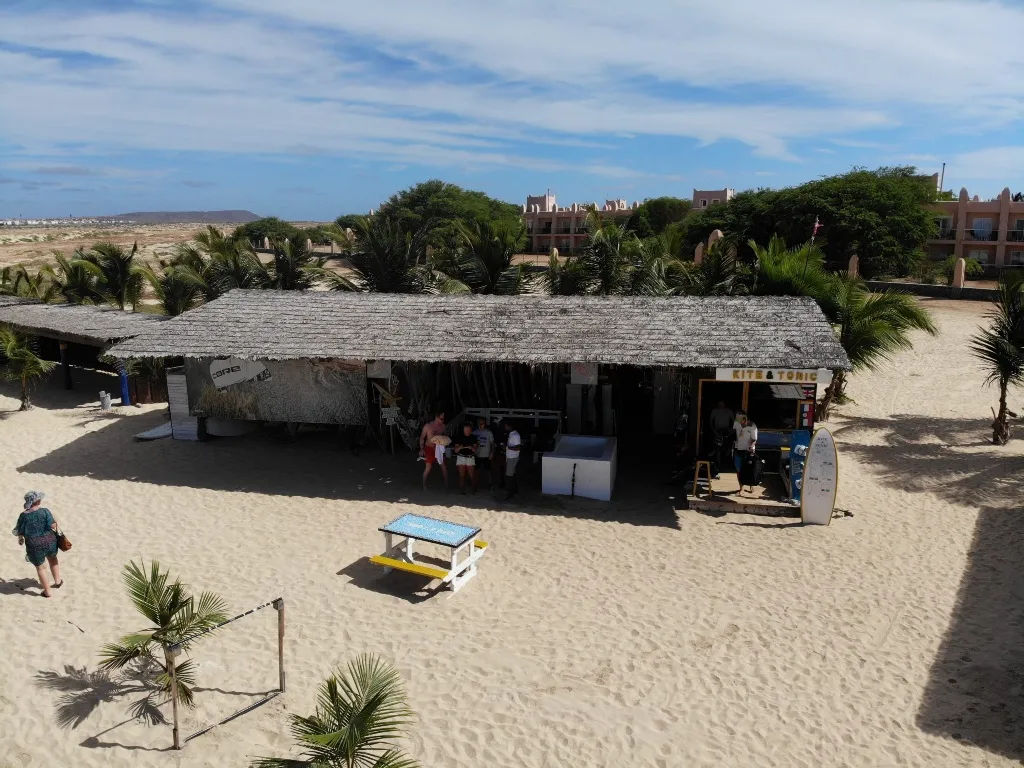
The sea is about 22 °C from February to May and 26 to 27 °C in autumn, so pack a long 3 mm or a 3/2 mm for midwinter. Kite & Tonic teaches on the RIU beach from its own boat, and the RIU Palace Santa Maria, part of the same resort complex, is about 800 m (10 minutes on foot) from the school. Choosing between islands? Compare Sal with Boa Vista below.

At a glance

Sal at a glance

Main spots
Kite Beach (east coast), the RIU beach at Ponta Preta and Santa Maria bay; the Ponta Preta wave for experts
Wind
North-east trade wind: side-onshore at Kite Beach, side-offshore in Santa Maria bay and on the RIU beach
Season
About November to May; most wind from January to mid-April (school figures)
Water
About 22 °C from February to May, 26–27 °C from August to November
Wetsuit
Long 3 mm or 3/2 mm from January to March, a shorty in late autumn and spring
Kites
A 7 to 11 m quiver for most riders
Airport
Sal (SID), about 20 minutes from Santa Maria
Time zone
One hour behind the UK in winter
Best for
Riders at ease in chop, learners with a school, and wave riders at Ponta Preta

Verified with the official sites of Kite & Tonic, Island Kite School and Kite Verde, IKSURFMAG, Kiteguide, Planet Kitesurf Holidays, ION Club, The Trip Verdict, Cape Verde Experience, Climates to Travel and Google Maps listings · Updated October 2026

See the place

Video

Sal, Cape Verde - Travel Guide

IKSURFMAG's Rou Chater explains what makes Sal special for kitesurfers, from riding off the grid to spots full of like-minded riders.

Video: IKSURFMAG on YouTube

The spots

The kite spots of Sal

Sal's main kite spots are in the south of the island, within a short taxi ride of Santa Maria; the wave spots further up the west coast are for experts. They face different ways, so the same trade wind blows onshore at one and off the beach at another: pick by your level, not by the photos.

Kite Beach

East coast, about 10 minutes by car from Santa Maria

Wind:
Side-onshore (cross-on from the left)
Water:
Chop and swell, a reef about 70 m out, often a shorebreak
Level:
Most schools teach here; easiest with an instructor
On the beach:
Kite centres and two restaurants, no hotel

Sal's main and busiest kite spot, set in the dunes on the east coast. The wind blows towards the beach at an angle, which is why so many schools teach here, but the water is rarely flat: there is chop, frequent swell and, on big days, a shorebreak to get through. Kite & Tonic counts up to 150 kiters on the water in high season and warns about rocks and collisions. Several centres work the beach, Mitu Monteiro's school among them. There is no hotel on the spot, so riders stay in Santa Maria and take a taxi, about €5 to €7 each way.
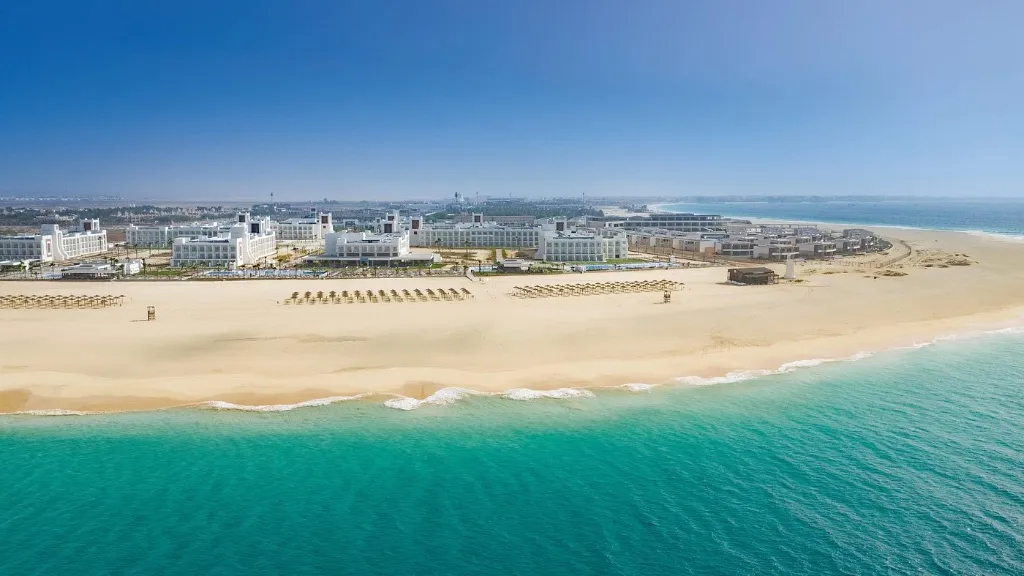
The RIU beach at Ponta Preta

West coast at the southern tip, in front of the Riu Funana and Riu Cabo Verde

Wind:
Side-shore to slightly side-offshore (school figures)
Water:
Smooth and flat over white sand, sometimes a shorebreak
Safety:
Kite & Tonic keeps a boat on the water
Schools:
Kite & Tonic, Island Kite School and others

The beach in front of the RIU complex is where Kite & Tonic and Island Kite School are based. Kite & Tonic says the wind here is the strongest on the island, with nothing upwind to block it, and describes flat water over white sand with no rocks. Because the wind blows slightly off the beach, lessons run with a boat. Two tacks upwind bring you to the Ponta Preta wave. The RIU Palace Santa Maria, in the same connected complex, is about 800 m from the school.

Santa Maria bay

The long south-facing beach in front of the town

Wind:
Side-offshore and gusty at one end of the bay, more side-shore at the other (Kite & Tonic)
Water:
Flat close to the shore
Level:
Experienced riders, or lessons with a boat
Good to know:
Busy with swimmers near the town

Santa Maria's 4 km beach has flat water close to the shore, but the wind blows from the land, so riding alone here needs solid upwind skills. Kite Verde teaches in the bay with a safety boat, and Planet Kitesurf Holidays rates it as more forgiving for learners than Kite Beach. Near the town, launching and landing among swimmers is the tricky part.

Ponta Preta

The reef point at the northern end of the RIU beach

Wind:
Cross-offshore
Wave:
Big on good days (4 to 5 m per Kiteguide, 3 to 6 m per Planet), breaking close to the shore
Level:
Experts only, no safety cover
Best months:
January to March for wind and waves (school figures)

Planet Kitesurf Holidays calls it one of the better waves in the Atlantic, and the GKA wave world tour has stopped here several times; it is the home spot of riders such as Mitu Monteiro and Airton Cozzolino. The wave breaks close to volcanic rock with the wind blowing off the shore, so it is no place to learn: watch it from the beach unless you are an experienced wave rider.

Stay

Where to stay near the kite spots

RIU Palace Santa Maria is our hotel on Sal: a 5-star, 24-hour all-inclusive resort with 1,001 rooms, connected to the Riu Funana and the adults-only Riu Cabo Verde. Kite & Tonic's station is on the beach in front of those two hotels, about 800 m (10 minutes on foot) from the Palace's main building, so it is a short walk rather than a step from your room. No hotel stands directly on Kite Beach: riders who want it every day stay in Santa Maria and take a taxi.

Schools

Kite schools in Sal

Kite & Tonic teaches on the RIU beach with no more than two students per instructor and a boat on the water. Kite Beach has several more centres, including Mitu Monteiro's school and beach club; Kite Verde runs transfers to Kite Beach and boat lessons in Santa Maria bay, and ION Club has a centre on Santa Maria beach.

Wind forecast

7-day wind forecast at Santa Maria & Kite Beach

Updated 2 Nov, 10:47

  1. Today

    2 Nov

    6kts

    Gusts 12

    NW · 12m+

    LIGHT
  2. Tue

    3 Nov

    7kts

    Gusts 13

    NE · 12m+

    LIGHT
  3. Wed

    4 Nov

    14kts

    Gusts 26

    E · 12m

    OK
  4. Thu

    5 Nov

    9kts

    Gusts 14

    ENE · 12m+

    LIGHT
  5. Fri

    6 Nov

    15kts

    Gusts 24

    NE · 12m

    OK
  6. Sat

    7 Nov

    18kts

    Gusts 29

    NE · 10m

    GO
  7. Sun

    8 Nov

    13kts

    Gusts 23

    NE · 12m

    OK

GO16–24 ktsOK12–15 ktsSTRONG25 kts and moreLIGHTunder 12 kts

Strongest wind and gusts of the day, in knots. Kite sizes are a rough guide for a rider of about 75 kg. Weather data by Open-Meteo.com.

Season

Is Sal windy? Wind and water month by month

Yes, from autumn to early summer. The north-east trade wind sets in around October or November and blows until May or June; Kite & Tonic finds the most wind from January to mid-April, and Kite Verde puts a typical January day at 20 to 25 knots. From July to September the wind drops and the air turns humid, and most of the year's little rain falls between August and October.

Sal kitesurf season month by month
MonthWind (schools)Mean wind (station)SeaAir (max)Wetsuit
NovemberSeason starts, 12–18 knots11 knots26 °C28 °CBoardshorts or shorty
December15–20 knots12 knots24.5 °C26 °CShorty
January20–25 knots, the windiest stretch begins13 knots23 °C25 °CLong 3 mm or 3/2 mm
FebruaryPeak season14 knots22 °C25 °CLong 3 mm or 3/2 mm
March15–20 knots13 knots22 °C25 °CLong 3 mm or 3/2 mm
AprilStill strong until mid-April14 knots22.5 °C25.5 °CShorty or long 3 mm
MayStill windy, easing towards June14 knots22.5 °C26 °CShorty
June to OctoberSeason ends in June; July to September is the least windy period10–13 knots23–27 °C27–30 °CFew riding days

Sea and air temperatures and the mean wind speed are monthly averages for Sal, 1991 to 2020 (Climates to Travel); the station mean reads lower than the wind schools quote for typical riding days. Wind ranges come from Kite Verde and Kite & Tonic, and wetsuit advice follows Kite Verde and Planet Kitesurf Holidays.

Gear

What size kite for Sal

Bring a quiver from about 7 to 11 m. Kiteguide suggests 7 to 9 m with a bigger back-up for lighter days, and The Trip Verdict a 7, 9 and 11 m set for an average-weight rider, or a 9 and a 12 m if you can only take two. If you travel with your own gear, Kite & Tonic stores two kites and a board for €40 a week.

Lessons

Kite lessons in Sal: schools and prices

Kite & Tonic avoids the crowds of Kite Beach and teaches on the RIU beach from its own boat, with the instructor in the water next to you and no more than two students per instructor. On the price list on its website (checked in October 2026, no year shown), a 3-hour introduction costs €90 per person in a group of up to two, the full 11-hour beginner course €365 and two private hours €120. Confirm prices with the school when you book.

If you ride your own gear, Kite & Tonic charges €30 per rescue in front of its school, and The Trip Verdict puts an independent rescue at €30 to €50 around the islands, so ask your centre about a weekly safety package on day one.

Compare

Sal or Boa Vista?

The wind will not decide it: both islands sit in the same north-east trade wind, and local schools on each quote an average of about 20 knots in season. The difference is the water and the holiday around it. Sal has more kite centres, several spots within a short taxi ride and a lively town, while Boa Vista is bigger, quieter and more resort-based, with long open beaches and more swell.

Sal and Boa Vista for kitesurfers
TopicSalBoa Vista
Main kite spotsKite Beach, the RIU beach and Santa Maria bay; Ponta Preta for expertsSal Rei bay (Praia Carlota, Estoril) and Praia de Chaves; wave spots by 4x4 or boat
WaterChop and swell at Kite Beach, flat but side-offshore in the southOpen ocean with more swell; gusty close to shore in Sal Rei bay
SceneSeveral centres, shops and bars in Santa MariaQuieter and more resort-based
Off the waterSanta Maria's restaurants, Pedra de Lume, diving and boat tripsThe Viana desert, loggerhead turtles and seasonal whale watching
Best forA first Cape Verde kite trip, and anyone who wants a wave optionConfident riders who want space, and families happy in a resort
Our hotelRIU Palace Santa Maria, about 800 m from the kite schoolVOI Praia de Chaves Resort, with a kite centre listed on site

Drawn from Planet Kitesurf Holidays, Cape Verde Experience, ION Club and the schools' own figures (Kite Verde on Sal, the Duotone Pro Center on Boa Vista).

Families

Sal for families and non-kiters

Santa Maria is the centre of island life: a walkable town with beachfront restaurants, bars with live music and shops, and most hotels within reach of it. Kite Beach is all about riding, with two restaurants and no hotel, so families are better off by a pool or on Santa Maria's beach while the kiter rides. The sea is at its coolest, around 22 °C, from February to May, and guest reviews of the RIU Palace Santa Maria mention rough water and a strong undertow on windy days.

  • Pedra de Lume, an old salt crater where you float in the brine
  • Scuba diving with Santa Maria's dive centres
  • Boat trips and sailing days out
  • Buggy, quad and island tours
  • Splash Water World, the water park of the RIU resorts, for their guests

Travel

Getting there and getting around

Fly to Amílcar Cabral International Airport (SID) on Sal, about six hours direct from the UK. Santa Maria is around 20 minutes from the airport by taxi, and the RIU complex about 2 km from the town. In Santa Maria you can walk or cycle; for Kite Beach take a taxi (about €5 to €7 each way), join a school transfer or hire a car for about €40 to €50 a day. Boa Vista is a short inter-island flight away.

Map

Location

Honest notes

Good to know before you book

  • ION Club warns that Kite Beach is not supervised: ride within your level, and learn there with a school.
  • The wind blows off the beach in Santa Maria bay and on the RIU beach: ride there alone only if you can stay upwind, or with a boat-supported school.
  • Rescue for independent riders costs about €30 a time at the school that publishes it, and €30 to €50 elsewhere.
  • Evenings feel cool in the wind: Kite & Tonic suggests long trousers and a thin sweater from December to April.
  • Little rain falls all year, and most of it comes from August to October.

Our take

Our verdict

Great for

  • Intermediate riders who want reliable winter wind and a choice of spots
  • Wave riders: Kite Beach to practise, Ponta Preta for experts
  • Families who want a lively town and big all-inclusive resorts

Think twice if you are

  • A total beginner who wants standing-depth lagoon water: Sal has none, so look at El Gouna, which has wind all year
  • Anyone who wants a hotel right on Kite Beach: there is none
  • Kiting from July to September, the least windy months

FAQ

Frequently Asked Questions about Kitesurfing in Sal

When is the best time to kitesurf in Sal?

From about November to May. Kite & Tonic finds the most wind from January to mid-April, and Kite Verde puts a typical January day at 20 to 25 knots. July to September is the least windy part of the year.

Is Kite Beach on Sal good for beginners?

It can work with a school: the side-onshore wind pushes you back towards the beach, and many schools teach there. The water usually has chop and swell, though, and often a shorebreak, so some operators send first-timers to the flatter Santa Maria bay or the RIU beach, where lessons run with a boat.

Which is windier, Sal or Boa Vista?

Neither by much: both islands sit in the same north-east trade wind. Local schools quote an average of about 20 knots in season on both, Kite Verde for Sal and the Duotone Pro Center for Boa Vista.

Do I need a wetsuit to kitesurf in Sal?

Yes in midwinter. The sea drops to about 22 °C from February to May, and Kite Verde advises a long 3 mm from January to March, a shorty or a long suit in April and a shorty in May. In November, boardshorts or a shorty are usually enough.

What size kite should I bring to Sal?

A 7 to 11 m quiver covers most days for an average-weight rider, according to Kiteguide and The Trip Verdict. If you can only bring two kites, The Trip Verdict suggests a 9 m and a 12 m.

Is Ponta Preta suitable for beginners?

No. Ponta Preta is a reef wave for experienced riders, breaking close to volcanic rock with cross-offshore wind and no safety cover. Beginners should learn at Kite Beach or on the RIU beach with a school.

How far is Kite Beach from Santa Maria?

About 10 minutes by car, on Sal's east coast. A taxi costs about €5 to €7 each way, and some schools run their own transfers.

Is there a hotel right on Kite Beach in Sal?

No. There is no hotel directly on Kite Beach, and riders stay in Santa Maria. The closest beds to a kite station are in the RIU complex at Ponta Preta, where Kite & Tonic teaches on the beach; the RIU Palace Santa Maria is about 800 m from the school.

Sources

Last checked October 2026

We only publish facts we could confirm with the official website or two independent sources. Spotted something out of date? Write to info@kitesurf.holiday.